

Learning needlepoint stitches doesn’t need to be complicated. In fact, most needlepoint projects—especially for beginners—use just one or two basic stitches.
This guide walks you through the best beginner needlepoint stitches, explains when to use each one, and shows you how to stitch neatly and confidently—even if you’ve never picked up a needle before.
Start here if you’re brand new: Needlepoint for Absolute Beginners
Before stitching: Needlepoint Supplies for Beginners
How Many Stitches Do Beginners Really Need?
If you’re just starting out, here’s the truth:
👉 You only need ONE stitch to complete most beginner needlepoint projects.
That stitch is the tent stitch.
Everything else can come later.
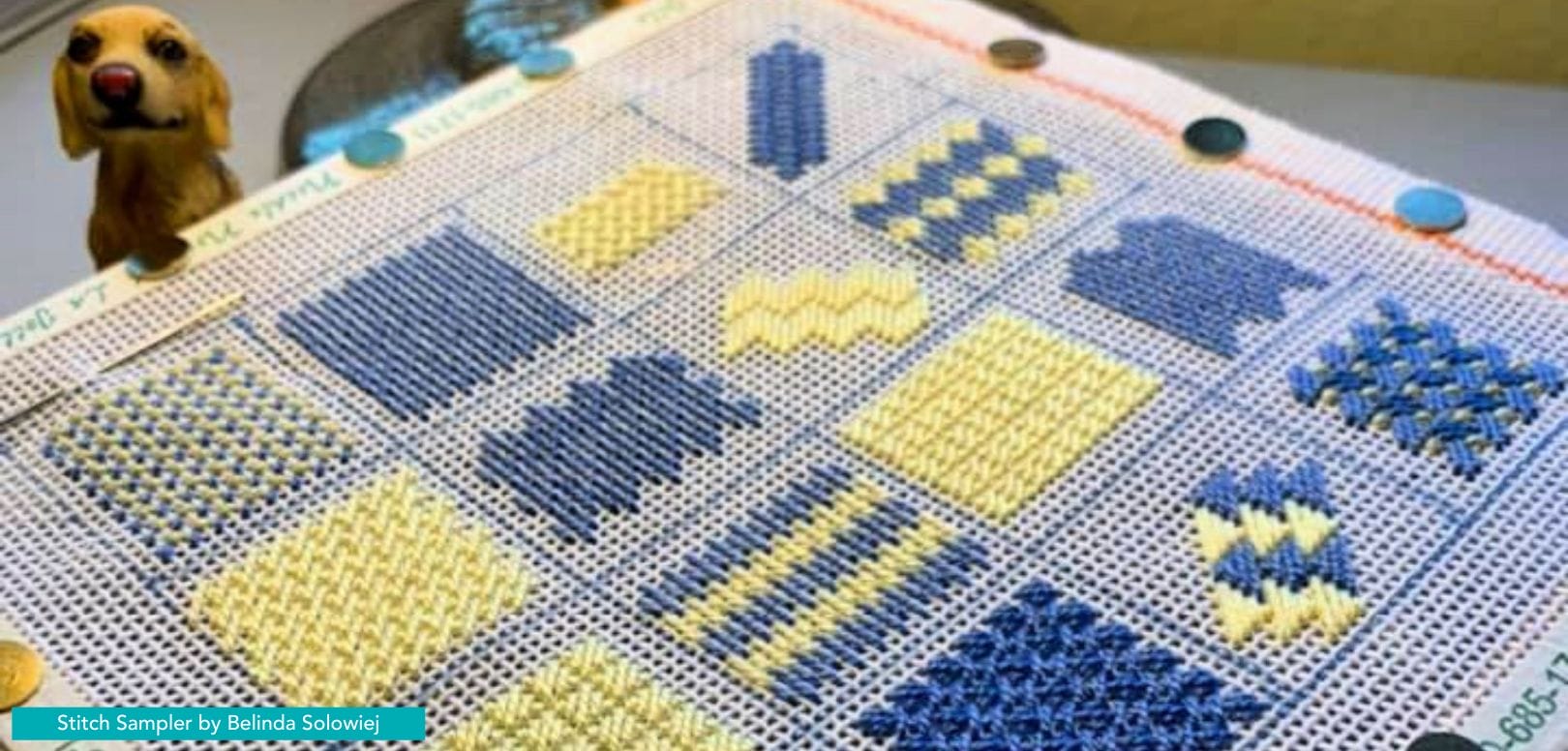
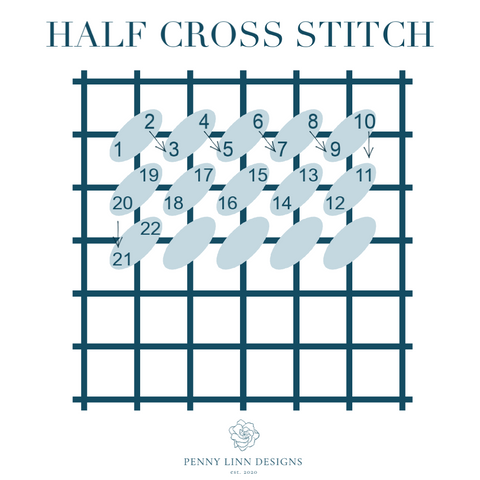
The Most Important Beginner Stitch: Tent Stitch
The tent stitch is the foundation of needlepoint. It creates a neat diagonal stitch that covers the canvas evenly and works for nearly every design.
Why tent stitch is perfect for beginners:
-
Easy to learn
-
Fast to stitch
-
Strong and durable
-
Looks great on simple and detailed designs
There are three types of tent stitch, but beginners only need to focus on two.
Continental Stitch (Best First Stitch to Learn)
The continental stitch is the easiest version of tent stitch and the best place to start.
How continental stitch works:
-
Diagonal stitches worked row by row
-
Same direction on the front
-
Slightly different pattern on the back
Why beginners love it:
-
Simple hand motion
-
Easy to correct mistakes
-
Great for small projects
Best for: bookmarks, ornaments, coasters, practice pieces


Basketweave Stitch (Stronger & More Advanced)
The basketweave stitch is another form of tent stitch, worked diagonally in a woven pattern on the back.
Why basketweave matters:
-
Prevents canvas distortion
-
Stronger for large projects
-
Creates smoother texture
Should beginners learn basketweave?
Yes—but after mastering continental stitch.
Start simple, then upgrade.
Best for: pillows, large wall pieces, frequently handled items


Half Cross Stitch (Simple but Limited)
The half cross stitch is a single diagonal stitch worked in one direction.
Pros:
-
Very fast
-
Easy to learn
Cons:
-
Less durable
-
Poor canvas coverage
This stitch is fine for decorative areas, but not ideal for full beginner projects.
How to Start and End Stitches (Beginner-Safe Method)
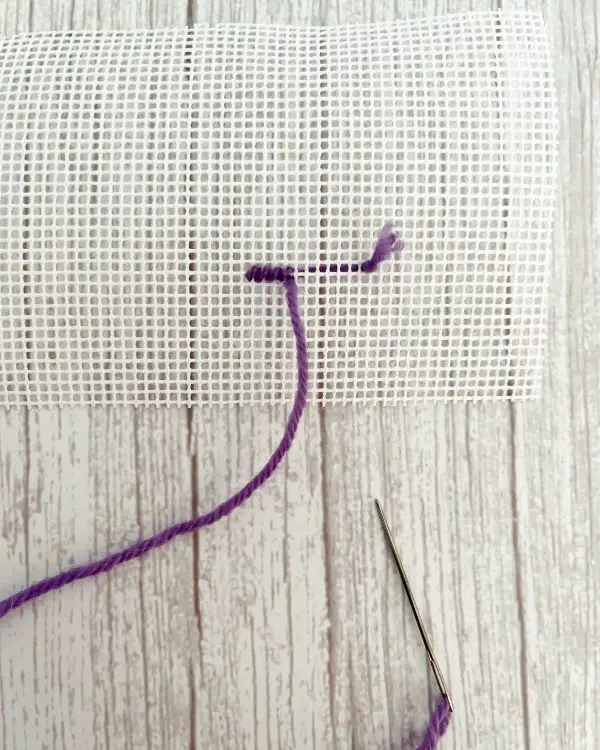
Starting a Thread (No Knots)
-
Leave a short tail on the back
-
Stitch over it to secure
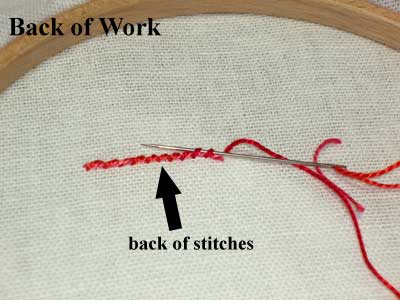
Ending a Thread
-
Run the needle under 4–5 stitches on the back
-
Trim excess
Avoid knots—they create bumps and uneven tension.
Related: Beginner Needlepoint Finishing Methods (future post)

Stitch Direction Rules (Very Important)
One of the most common beginner mistakes is changing stitch direction mid-project.
Always remember:
-
All stitches should slant the same way
-
Keep consistent row direction
-
Follow the same rhythm
Consistency = professional-looking needlepoint.
Needlepoint Tension Tips for Beginners
Good tension keeps your canvas flat and your stitches smooth.
Beginner tension rules:
-
Pull thread snug, not tight
-
Let the thread lie naturally
-
If canvas warps, loosen your grip
If your hands hurt, take a break.
Internal link opportunity: How to Fix Needlepoint Tension Problems
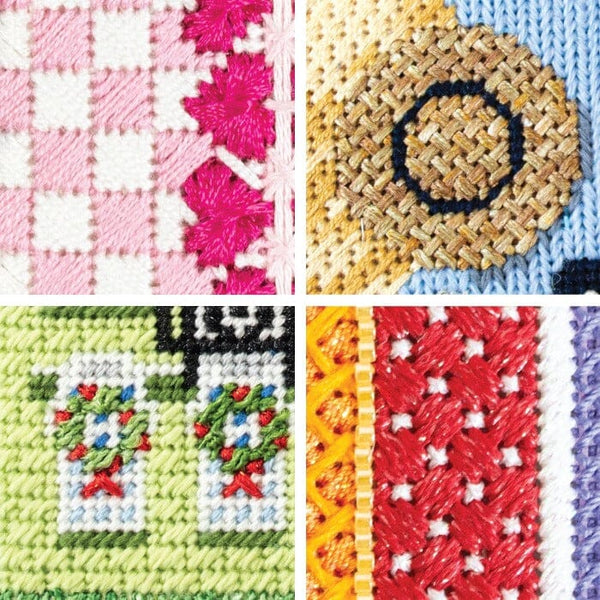
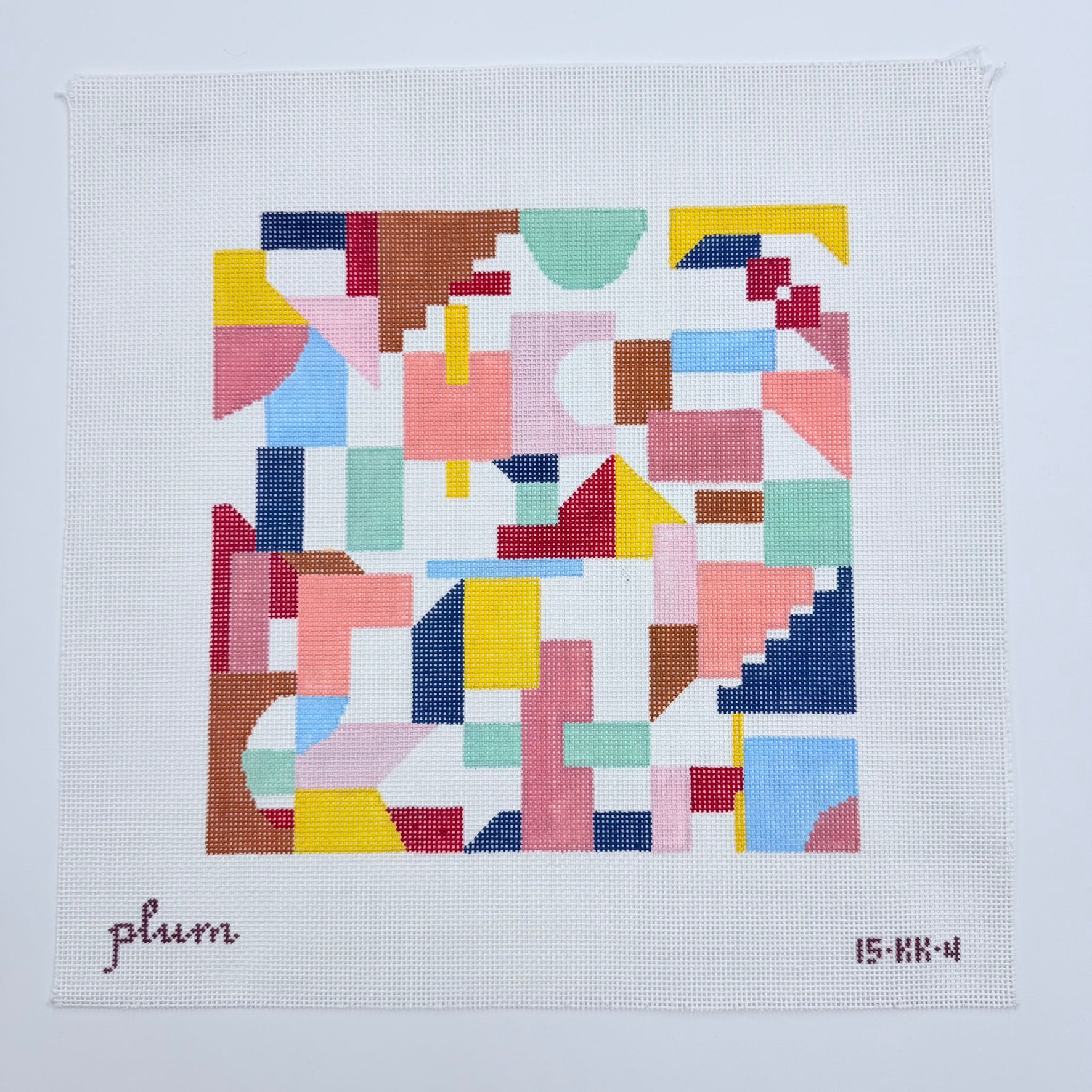
Easy Stitch Practice Ideas for Beginners
Before starting a full project, try:
-
Stitching a small square
-
Practicing straight rows
-
Filling one color block
Practice builds confidence faster than perfection.

Best Beginner Projects to Practice These Stitches
These projects are perfect for your first stitches:
-
Bookmarks
-
Small ornaments
-
Coasters
-
Keychains
Next read: Easy Needlepoint Projects for Beginners (next pillar)
Common Beginner Stitching Mistakes
Avoid these early on:
-
Pulling stitches too tight
-
Skipping canvas holes
-
Switching stitches mid-design
-
Using thread that’s too long
Mistakes are normal—needlepoint is very forgiving.
Beginner Stitch Cheat Sheet
| Stitch | Difficulty | Best Use |
|---|---|---|
| Continental | Easy | First projects |
| Basketweave | Medium | Large pieces |
| Half Cross | Easy | Small accents |
What to Read Next (Internal Linking Section)
To continue building skills:
-
Easy Needlepoint Projects for Beginners
-
How to Finish Needlepoint (Beginner Guide)
-
Needlepoint Supplies for Beginners
Each article links back to this stitch guide to strengthen your SEO silo.
Final Thoughts: Master One Stitch First
You don’t need dozens of stitches to enjoy needlepoint. One solid stitch, done well, beats ten complicated ones done poorly.
Master tent stitch first—everything else builds naturally from there.
0 comments